Understanding Esophageal Cancer: How It Differs from Stomach and Throat Cancer
When someone hears the word cancer, a million thoughts rush through their mind — fear, confusion, questions, and uncertainty. It gets even more confusing when cancers occur in parts of the body that are close to each other — like the esophagus, stomach, and throat. Aren’t they all part of the same region? Don’t they have the same symptoms?
Not quite.
Although esophageal cancer, stomach cancer, and throat cancer might seem similar at first glance, they’re actually quite different in many ways — from where they begin, to how they progress, and even how they’re treated. And knowing the differences can make a huge impact on early diagnosis and better treatment.
Let’s Get to Know the Parts of Your Body Involved:
What is the Esophagus?
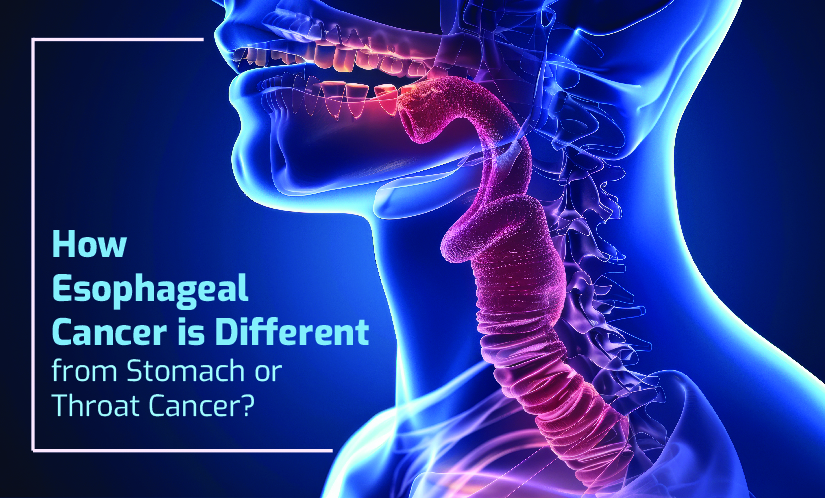
The esophagus is a long, muscular tube that connects your throat to your stomach. Every time you swallow food or water, it travels down this tube and into your stomach. When cancer starts here, it’s called esophageal cancer.
What is the Stomach?
Your stomach is the organ that digests food after it comes down the esophagus. When cancer starts in the lining of the stomach, it’s known as stomach cancer (also called gastric cancer).
What is the Throat?
The throat includes your pharynx and larynx (voice box). It’s higher up than the esophagus and helps you breathe, speak, and swallow. When cancer starts here, it’s known as throat cancer.
The Main Differences: Esophageal vs Stomach vs Throat Cancer:
1. Where the Cancer Starts:
This is the most basic and most important difference:
- Esophageal cancer starts in the food pipe.
- Stomach cancer starts in the lining of the stomach.
- Throat cancer starts in the pharynx or larynx.
Even though they’re located near each other, they behave very differently — which is why accurate diagnosis is so important.
Dr. Sanjay Sharma, a trusted esophageal cancer expert in Cumballa Hill, explains:
“Each of these cancers grows in its own way. That’s why treating esophageal cancer isn’t the same as treating stomach or throat cancer.”
2. What Causes Them?
Let’s talk about risk factors — the things that make you more likely to get each type of cancer.
a. Esophageal Cancer:
- Long-term acid reflux (GERD)
- Barrett’s esophagus
- Smoking
- Drinking alcohol
- Obesity
- Low intake of fruits and veggies
b. Stomach Cancer:
- Eating smoked or salty foods
- Family history of gastric cancer
- Smoking
c. Throat Cancer:
- Smoking and tobacco chewing
- Heavy alcohol consumption
- HPV infection (especially in younger people)
- Poor oral hygiene
Dr. Sanjay Sharma, who is also a highly experienced esophageal cancer surgeon in Bandra, points out: “While lifestyle factors like smoking affect all three, esophageal cancer is most strongly linked to chronic acidity. People often ignore long-standing acid reflux, not realizing it can turn into something serious.”
3. What Symptoms to Watch For?
Symptoms can sometimes be similar — but there are some key differences that help doctors know where to look.
a. Esophageal Cancer:
- Difficulty swallowing (especially solid foods)
- Feeling like food gets stuck
- Chest pain
- Chronic cough or hoarseness
- Unexplained weight loss
b. Stomach Cancer:
- Feeling full quickly
- Nausea or vomiting
- Heartburn
- Stomach pain
- Fatigue or blood in stool
c. Throat Cancer:
- Constant sore throat
- Hoarse voice
- Lump in the neck
- Pain while swallowing
- Ear pain
One of the biggest warning signs of esophageal cancer is difficulty swallowing — also called dysphagia. If you’re feeling this regularly, don’t wait. Early action can change everything.
4. How they’re diagnosed?
All three cancers require imaging tests and a biopsy to confirm, but the tools used may vary.
- Endoscopy (used for both esophageal and stomach cancers)
- Laryngoscopy (for throat cancer)
- CT scan / MRI / PET scan (to check spread)
- Barium swallow test (for esophagus)
Dr. Sanjay Sharma adds:
“With early-stage esophageal cancer, endoscopy can help us detect tiny lesions that aren’t even visible on a CT scan. That’s why we always stress early screening.”
5. Types of Cancer Cells Involved:
Each cancer may have different cell types:
- Esophageal cancer: Adenocarcinoma (lower part of esophagus) or squamous cell carcinoma (upper part)
- Stomach cancer: Mostly adenocarcinoma
- Throat cancer: Mostly squamous cell carcinoma
Different cell types respond differently to treatments — and that’s why identifying the exact type is crucial.
6. How the Treatment Plans Differ?
While surgery, radiation, and chemotherapy are used for all three, the way they are used is different.
a. Esophageal Cancer:
- Surgery (removing the tumor and part of the esophagus)
- Radiation
- Chemotherapy
- Immunotherapy in advanced stages
- Endoscopic treatments in early stages
b. Stomach Cancer:
- Gastrectomy (removing part or all of the stomach)
- Chemotherapy
- Targeted therapy (like HER2 drugs)
- Radiation (less common)
c. Throat Cancer:
- Radiation (often the first choice)
- Surgery (in some cases)
- Chemotherapy
- Immunotherapy (especially in HPV- related cancers)
Surgery for esophageal cancer is one of the most complex procedures in oncology. It needs an expert who understands the anatomy inside-out.
That’s where Dr. Sanjay Sharma, an experienced esophageal cancer surgeon in Bandra, stands out. His years of surgical excellence and minimally invasive techniques have helped patients recover faster and with fewer complications.
7. Recovery & Prognosis:
All three cancers are treatable — especially when caught early. But prognosis varies.
- Esophageal cancer: Tends to be diagnosed late; prognosis depends on stage.
- Stomach cancer: Often found late due to vague symptoms.
- Throat cancer: Can be caught early, especially if caused by HPV.
The earlier you catch it, the better the outcomes.
Why Choose an Esophageal Cancer Specialist?
Treating esophageal cancer is not the same as treating throat or stomach cancers. It needs a surgeon with experience, precision, and knowledge of modern techniques.
If you’re in Mumbai, Dr. Sanjay Sharma is one of the most trusted names in the field. As an Esophageal Cancer Specialist in Mumbai, he is known for providing world-class care using advanced technology and personalized treatment plans. Whether you're near Cumballa Hill, Bandra, or anywhere in the city, his approach focuses on early diagnosis, minimal invasiveness, and patient comfort.
It’s easy to confuse esophageal cancer with stomach or throat cancer. After all, the symptoms can seem similar, and the body parts are located close to each other.
But as you’ve now seen, these cancers are very different in how they begin, what causes them, how they’re treated, and how they progress.
The good news? If caught early, all three can be treated effectively — and even cured in many cases.
So, don’t ignore the warning signs like:
- Trouble swallowing
- Constant acid reflux
- Hoarseness that doesn’t go away
- Unexplained weight loss
If you have any of these, get checked. It could save your life.
For expert consultation, reach out to Dr. Sanjay Sharma, leading esophageal cancer expert in Cumballa Hill, and top esophageal cancer surgeon in Bandra. Your health deserves attention — and you deserve the best care.
Recent Articles

Dense Breasts and Breast Cancer: When Is a Mammogram Not Enough? | Dr. Sanjay Sharma
Read More
How Quickly Should Breast Cancer Treatment Start After Diagnosis? | Dr. Sanjay Sharma
Read More