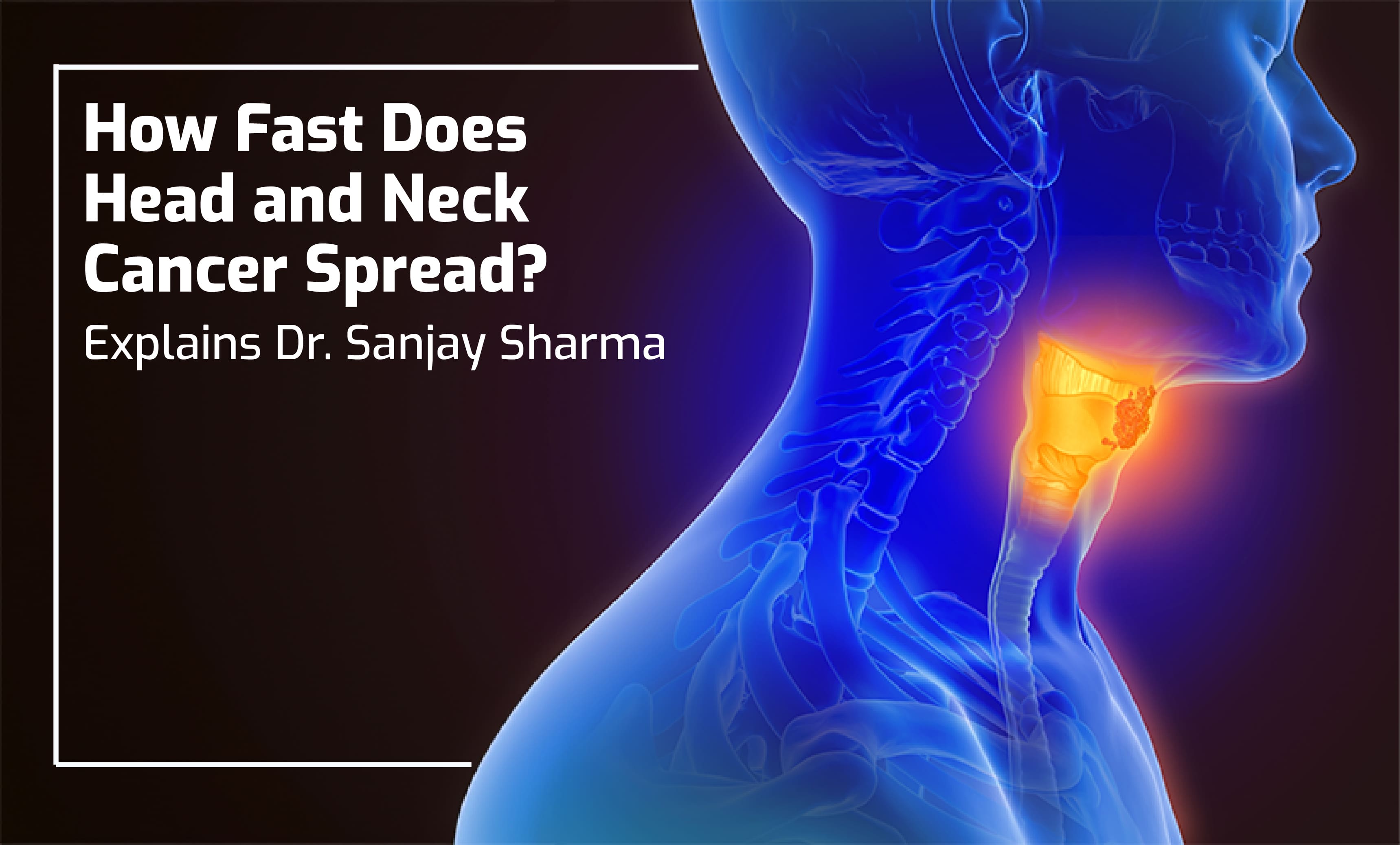
How Fast Does Head and Neck Cancer Spread? | Dr. Sanjay Sharma Mumbai
When someone is diagnosed with cancer—or even suspects it—one question often creates the most anxiety: “How fast is it spreading?”
This concern is very real, especially with head and neck cancers, which affect essential daily functions like speaking, eating, and breathing. The fear of rapid progression can feel overwhelming.
Understanding Head and Neck Cancer
Head and neck cancer is not just one disease it’s a group of cancers that can develop in different areas such as the mouth, throat, voice box, and nearby regions.
Most of these cancers begin in the lining of these areas. Because these regions are closely connected through tissues and lymph nodes, cancer cells can sometimes move from one place to another.
But here’s the important part: Not all head and neck cancers behave the same way.
Some grow slowly over time, while others can be more aggressive.
So, How Fast Does It Actually Spread?
Let’s be clear there is no fixed timeline.
For some people, the cancer may take months or even years to grow and spread. For others, especially in more aggressive types, it can progress within weeks to a few months.
That might sound worrying, but understanding why this happens can help you stay in control.
What Decides the Speed of Spread?
1. The Type of Cancer: Different cancers behave differently. For example, cancers in the throat may spread faster compared to those on the vocal cords. Some cancers linked to infections (like HPV) can grow quickly but respond very well to treatment.
2. The Stage at Which It’s Found: This is one of the biggest factors.
- In early stages, cancer is small and limited to one area
- In later stages, it may have already spread to nearby lymph nodes or beyond
The earlier it is detected, the slower and more manageable it usually is.
3. Location Matters More Than You Think: Certain parts of the head and neck have a richer blood supply and more lymph nodes. This makes it easier for cancer cells to travel.
For example:
- Throat cancers tend to spread faster
- Vocal cord cancers are often detected early and grow slower
4. Lifestyle Habits: Habits play a major role in how cancer behaves. Smoking, chewing tobacco, and heavy alcohol use can:
- Speed up cancer growth
- Reduce the body’s ability to fight disease
This is why doctors often emphasize lifestyle changes along with treatment.
5. Individual Body Differences: Every person’s body reacts differently. Some people have stronger immune responses, while others may have underlying health conditions that allow cancer to grow faster.
This is where expert guidance from a specialist like Dr. Sanjay Sharma becomes essential.
How Does the Cancer Spread Inside the Body?
Understanding this can make things less frightening.
Cancer doesn’t just “jump” randomly—it follows certain pathways:
1. Local Spread: It grows into nearby tissues gradually.
2. Lymph Node Spread: This is the most common route. Cancer cells move to lymph nodes in the neck.
3. Distant Spread: In advanced cases, it can travel to organs like the lungs or liver.
But remember—this usually happens only if the cancer is not treated in time.
Early Signs You Should Pay Attention To
One of the biggest challenges with head and neck cancer is that early symptoms are often ignored.
Here are some signs that should never be overlooked:
- A sore throat that doesn’t go away
- Difficulty swallowing
- Persistent hoarseness
- A lump in the neck
- Mouth ulcers that don’t heal
- Unexplained weight loss
If these symptoms last more than 2–3 weeks, it’s important to get them checked.
Can It Become Serious Quickly?
Yes but not always.
In some cases, cancer can remain unnoticed for a long time. But once it reaches a certain stage, it may start progressing faster.
This is why early detection makes such a big difference.
Acting early often means simpler treatment and better outcomes.
Why Early Diagnosis Changes Everything?
When detected early:
- Treatment is less complicated
- Recovery chances are higher
- Quality of life is better
On the other hand, delayed diagnosis can lead to more aggressive treatments and longer recovery times.
If you’re searching for the best cancer specialist in Bandra or the best cancer doctor in Cumballa hospital, the goal should always be early consultation not delayed decisions.
How Doctors Check the Spread?
Doctors use a combination of tests to understand how far cancer has spread:
- Physical examination
- Imaging scans (like CT or MRI)
- Biopsy (confirming cancer cells)
These tests help create a clear picture and guide the treatment plan.
Treatment Depends on the Spread
- Early-stage cancer may need only surgery or radiation
- Advanced stages may require a combination of treatments like chemotherapy, radiation, and surgery
Modern treatments are highly advanced and personalized.
Can Head and Neck Cancer Be Cured?
Yes especially when caught early.
Even in advanced cases, treatment can:
- Control the disease
- Improve symptoms
- Extend life significantly
The key is not to panic but to act.
What You Can Do Right Now?
If you’re worried about head and neck cancer, here are simple steps you can take:
- Don’t ignore symptoms
- Avoid tobacco and alcohol
- Maintain good oral hygiene
- Eat a balanced diet
- Go for regular check-ups
Small actions can make a big difference.
Clearing Common Misconceptions
Let’s quickly address a few myths:
- “Cancer spreads overnight” → Not true. It usually takes time
- “No pain means no cancer” → Early cancer is often painless
- “Only smokers get it” → Not always
Awareness is your best defense.
When Should You See a Specialist?
If something feels off and doesn’t improve within a few weeks, it’s time to consult a doctor.
Getting an expert opinion from someone experienced like Dr. Sanjay Sharma, known as a best head and neck cancer doctor in Mumbai, can give you clarity and peace of mind.
So, how fast does head and neck cancer spread?
The truth is it varies. But what truly matters is how quickly you respond.
Early action can slow down the disease, improve treatment success, and even save lives.
Instead of worrying about speed, focus on timely diagnosis and the right care.
Because in cancer care, time is not just important it’s everything.
Recent Articles
Dense Breasts and Breast Cancer: When Is a Mammogram Not Enough? | Dr. Sanjay Sharma
Read More
How Quickly Should Breast Cancer Treatment Start After Diagnosis? | Dr. Sanjay Sharma
Read More